The choice between 2-wires system and IP system
Choosing between 2-Wires and IP video door entry systems is not a matter of which is "better" or "worse," but rather about selecting the right technology to fit your specific project requirements.
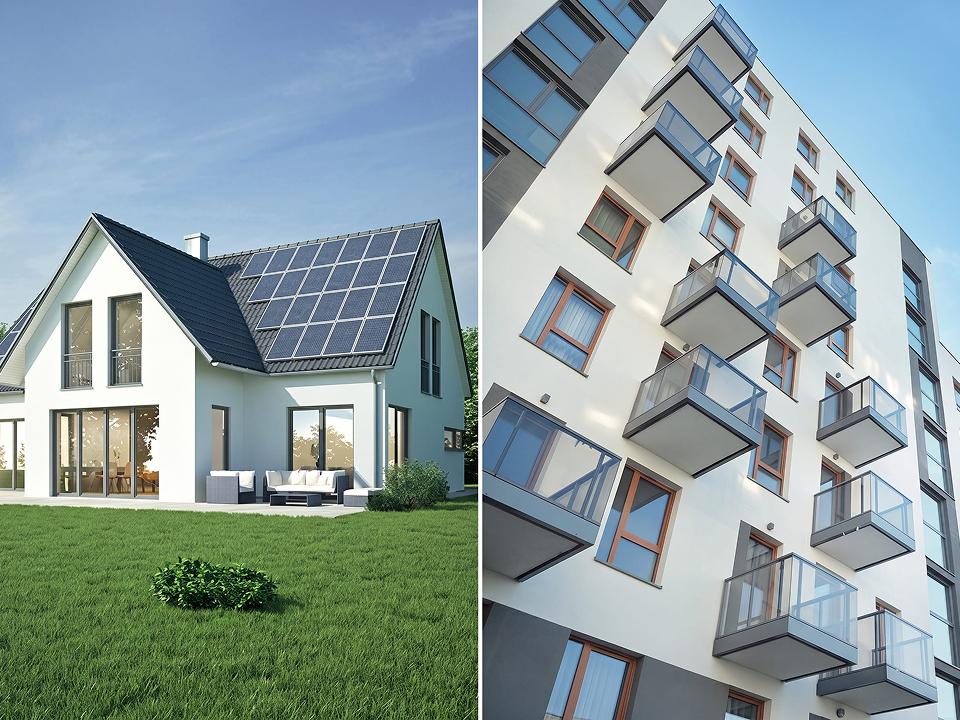
2-Wires System: ideal for small and medium-sized systems
Ideal for small and medium-sized systems, the 2-Wires System is a quick and easy solution suitable for single-family, semi-detached residential settings and medium-sized condominiums.
Choose the 2-Wires System for:
renovations where you can adapt or reuse existing cabling,
small to medium-sized residential buildings,
projects where cost control and technical simplicity are the primary factors.
It is a robust and consolidated solution optimized for most standard scenarios.
IP System: ideal for large and complex systems
IP System is perfect for long distances, large residential complexes, and wherever advanced features are required.
Choose the IP System for:
Large-scale projects (compounds),
new constructions already featuring a LAN/Fiber data backbone,
and environments requiring high-traffic management through multi-channel communication.
It is the ideal choice for advanced security needs, such as 3D facial recognition, integrated alarms for each apartment, and high-definition (720p) video quality.

2-Wires System versus IP System: a quick side-by-side comparison
The choice between a 2-wires and an IP video door entry system depends on the size, complexity of the system, and the required functions. Here's a quick side-by-side comparison that highlights their respective strengths.
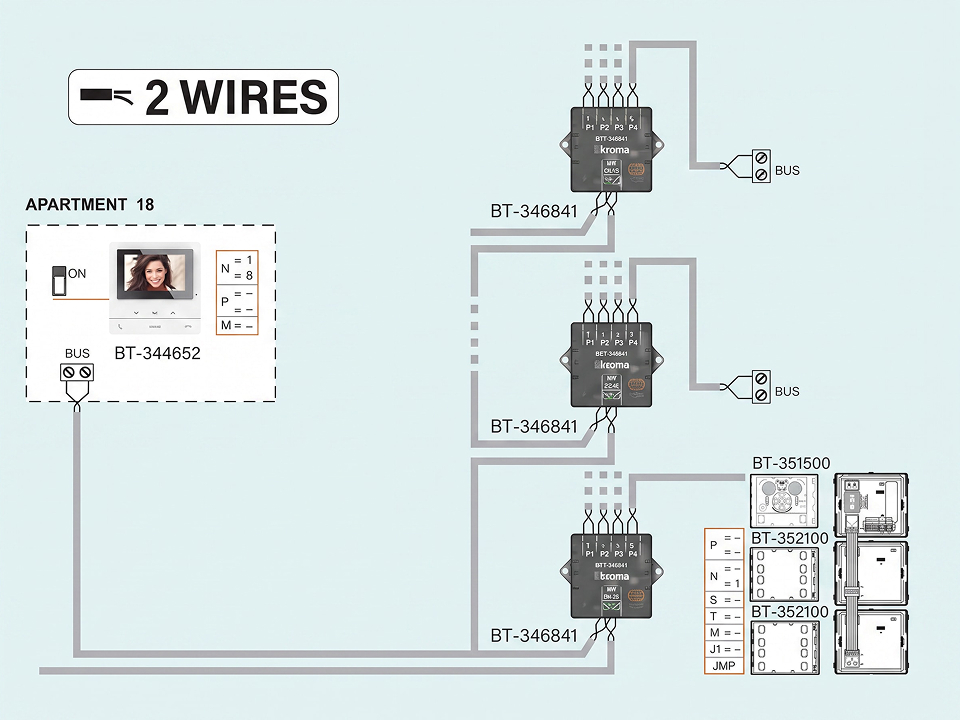
2-Wires System distinctive features: two-wire cabling, device-level configuration and dedicated single-channel operation
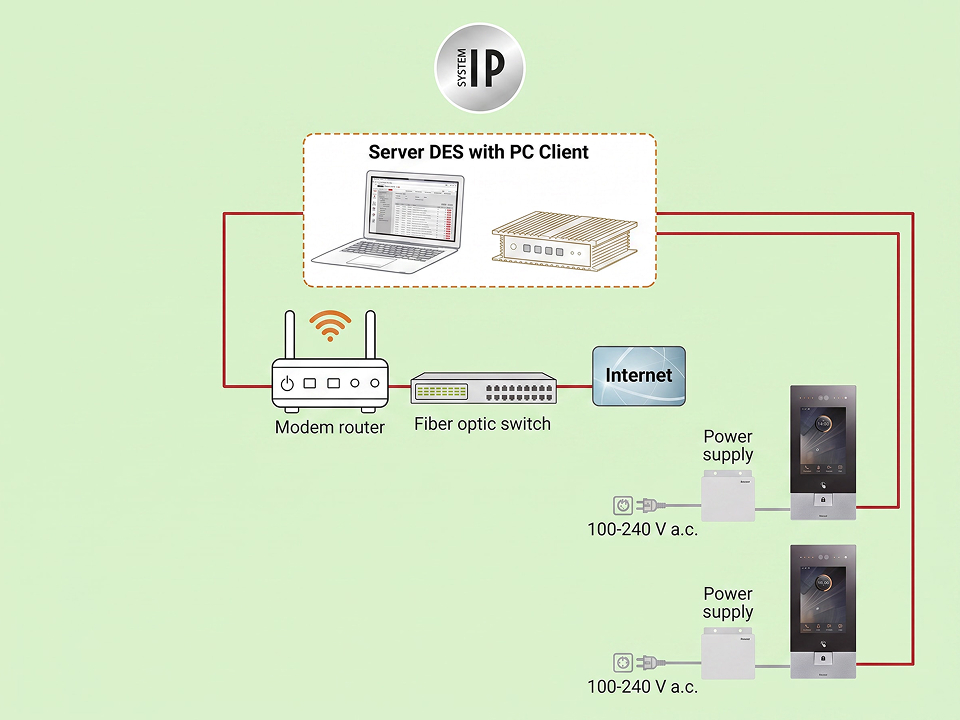
IP System distinctive features: LAN cabling, centralized configuration and flexible multi-channel operation
Comparing wiring method, configuration and main features
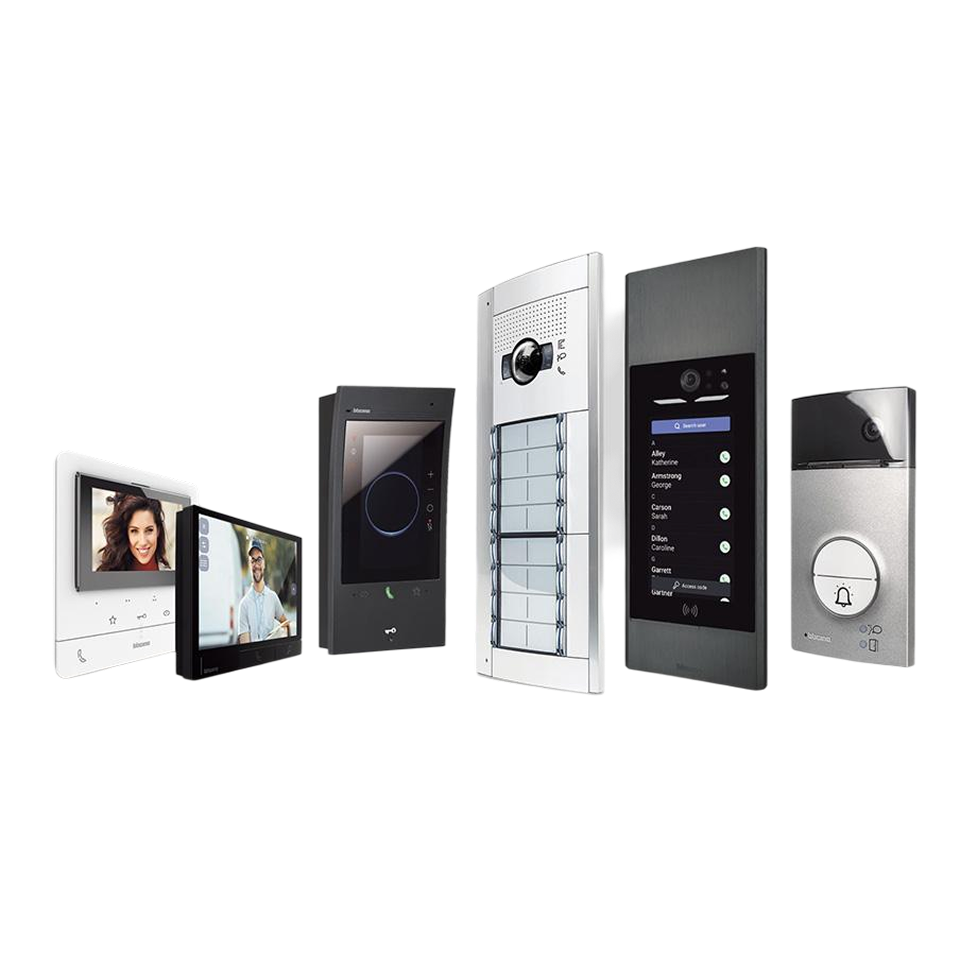
2 Wires systems

IP Systems
Here are some Frequently Asked Questions designed for installers
What are the main differences in the cable to be used for the two systems?
In the 2-wires system, the transmission mode is a dedicated BUS cable; the use of the white BTicino cable (336904-336905) is recommended. It is a non-polarized twisted pair, ensuring maximum performance and distances. In the IP system, on the other hand, wiring follows the standard rules of LAN networks, using RJ45 cables (Cat 5/Cat 6). While the 2-wire cable requires specific attention to the cable type to avoid drops in video performance, the IP system is based on standard or existing network infrastructures.
How do I manage the maximum distances and expandability of the system?
With the 2-wires system, using the recommended cable, the maximum distance between the entrance panel and the farthest internal unit is 200 meters, extendable up to a total of 600 meters by using up to two expansion interfaces. With the IP system, the basic rule is the same as for LAN networks: a maximum of 90 meters between two active elements. However, for long distances, it is possible to use additional switches or, for kilometer-long runs, fiber optics, making IP ideal for very large complexes.
What are the differences in the configuration procedure?
In the 2-wires system, each element (internal units, entrance panels, interfaces, actuators) must be configured individually, either physically using configurators or through the onboard menu. The IP system offers centralized management: a single software program (IP DES PRO) on a PC makes it possible to configure all system elements (even thousands), associate users and functions, and even pre-configure devices by scanning barcodes.
The customer requires multiple people to use the video door entry system at the same time. Which system should I choose?
You should choose the IP system. The 2-wires system allows only one operation at a time (if the riser is busy with a call, others cannot make calls or use the intercom). Thanks to its data network architecture, the IP system supports multi-channel operation, allowing multiple calls, intercom conversations, and other functions to run simultaneously without occupying the line for everyone.
How are devices powered in the two systems?
In the 2-wires system, the BUS carries both the digital signal and power to all devices. In the IP system, PoE (Power over Ethernet) technology is used: the same RJ45 network cable carries both data and power from the relevant PoE switches to the internal units and entrance panels. In both cases, additional power supplies are available for local requirements.
Is it possible to integrate biometric access control functions (face/fingerprint)?
Yes, but natively only with the IP system. Advanced IP entrance panels offer 3D facial recognition, fingerprint reading, and access codes, all of which can be managed and associated with residents through the centralized software. The 2-wires system manages access control through badges/RFID and keypad, but does not include integrated biometric functions.
How do the two systems handle the integration of security cameras?
The IP system allows direct integration with any ONVIF IP camera on the same network, with viewing available on internal units and at the concierge station. The 2-wires system can integrate specific Wi-Fi cameras through the Home + Security app when connected internal units are used, but it does not provide native direct ONVIF integration on standard monitors as the IP system does.
Can I install an IP system in an older apartment building without a data network?
Technically yes, but it requires complete rewiring. Unlike new apartment buildings, where a LAN network is often already planned, in an older building you will need to run network cables (or fiber) through the conduits, just as you would when installing a new 2-wires BUS. If the conduits are full or the wiring is complex, the 2-wires system may be simpler, but IP is not ruled out if the infrastructure is properly prepared.
Are there burglar alarm functions integrated into the video door entry units?
Only in the IP system. Each IP internal unit is equipped with an 8-input rear terminal block that acts as an alarm control unit for wired sensors (contacts, motion detectors, smoke, flooding), managed directly from the monitor. In the 2-wires system, this function is not integrated into the internal unit.
When should I recommend IP over 2-wires?
Recommend the IP system when the installation is very large (long distances, multiple buildings), when simultaneous performance is required (multi-channel operation), or when specific functions are needed, such as facial recognition, native integration with IP cameras and alarm functions, or lift control. Recommend the 2-wires system for small or medium-sized residential contexts, simple renovations where existing conduits need to be reused easily, or where budget is a determining factor compared with advanced functions.